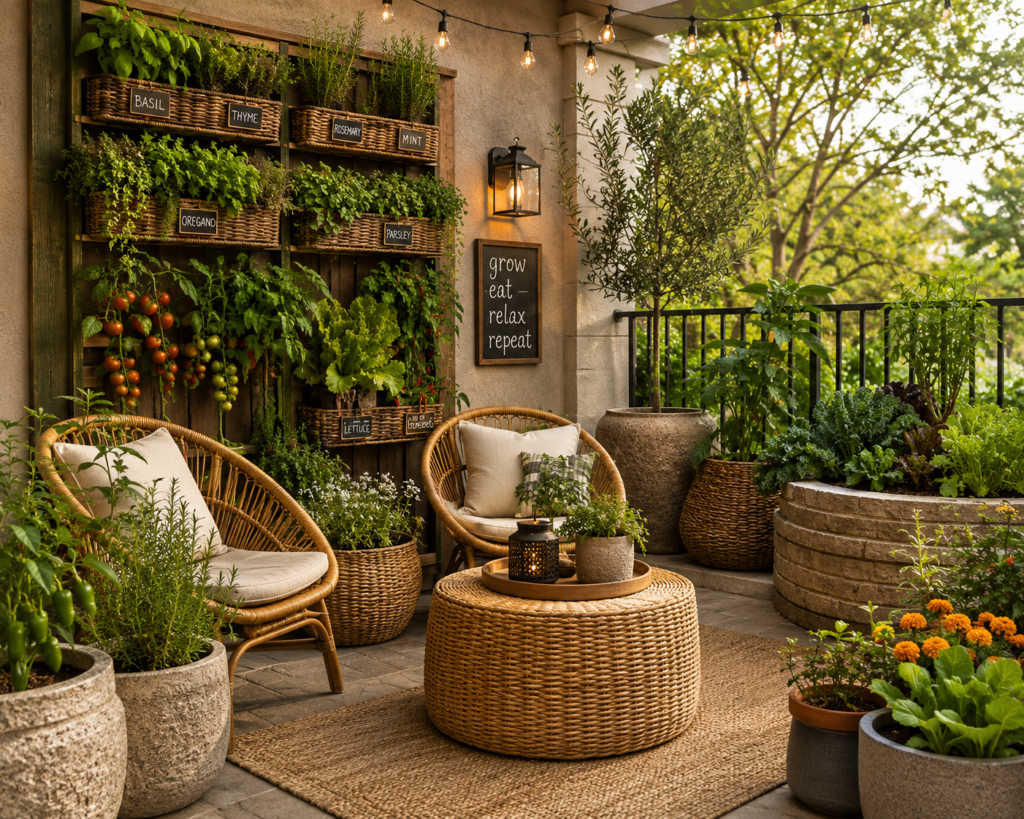
There’s something incredibly satisfying about stepping outside onto your patio and picking fresh herbs, juicy tomatoes, or crisp lettuce straight from your own little garden. The best part? You don’t need a huge backyard to grow your own food.
A small patio vegetable garden can be beautiful, relaxing, budget-friendly, and surprisingly productive… even if you’re working with a tiny apartment balcony or compact outdoor corner.
If you’ve been wanting to start a patio garden but feel overwhelmed, this beginner-friendly guide will walk you through everything you need to know to create a thriving small-space vegetable garden you’ll actually enjoy maintaining.
Start With the Sunlight
Before buying plants or containers, take a look at how much sunlight your patio gets each day.
Most vegetables need:
- 6–8 hours of sunlight for best growth
- Morning sun is ideal
- Leafy greens can tolerate partial shade
Watch your patio throughout the day and notice:
- Which areas get the most light
- Where shadows fall
- Which corners stay warm and bright
South-facing patios usually get the most sun, but even partially shaded spaces can grow herbs and leafy greens successfully.
Choose Beginner-Friendly Vegetables
When starting out, focus on vegetables that grow easily in containers and don’t require constant maintenance.
Easy Vegetables for Small Patio Gardens
- Cherry tomatoes
- Lettuce
- Spinach
- Green onions
- Radishes
- Peppers
- Cucumbers
- Kale
- Herbs like basil, mint, parsley, and thyme
These plants are compact, productive, and forgiving for beginners.
A large galvanized garden bed like this one gives herbs and lettuce plenty of room to grow:


Pick the Right Containers
One of the biggest mistakes beginners make is using containers that are too small.
Vegetables need room for healthy roots, proper drainage, and moisture retention.
Good Container Options:
- Terracotta pots
- Grow bags
- Raised planter boxes
- Wooden crates
- Hanging planters
- Vertical wall planters
Make sure every container has drainage holes to prevent root rot.
A raised garden bed with a folding storage shelf like this one keeps herbs elevated and tools close by:
Quick Container Guide:
| Plant | Recommended Pot Size |
|---|---|
| Herbs | 6–8 inches |
| Lettuce | 6–8 inches |
| Peppers | 10–12 inches |
| Tomatoes | 12–18 inches |
| Cucumbers | Large deep container |
Use High-Quality Potting Soil
Avoid using soil directly from the ground.
Container gardens do best with lightweight, nutrient-rich potting mix designed for planters.
Look for soil that:
- Drains well
- Holds moisture without becoming soggy
- Contains compost or organic nutrients
You can also mix in:
- Compost
- Worm castings
- Perlite for better drainage
Healthy soil makes a huge difference in how productive your patio garden becomes.
Start Small (Seriously)
One of the easiest ways to get overwhelmed is trying to grow too much at once.
Instead of filling your entire patio immediately, start with:
- 3–5 containers
- A few herbs
- One or two vegetables you actually eat often
This keeps gardening manageable and helps you learn what works best in your space.


Water Consistently
Container gardens dry out faster than traditional gardens, especially during summer.
Most patio gardens need:
- Daily watering during hot weather
- Consistent moisture
- Early morning watering for best results
A simple rule:
Stick your finger into the soil about an inch deep. If it feels dry, it’s time to water.
Avoid overwatering. Soggy roots can damage plants just as much as dryness.
A raised garden bed with a built-in trellis like this one is perfect for climbing plants like cucumbers or peas:
Add Vertical Gardening to Save Space
If your patio is tiny, think upward instead of outward.
Vertical gardening helps maximize space while making your patio feel lush and layered.
Vertical Gardening Ideas:
- Trellises for cucumbers
- Wall-mounted planters
- Hanging herb baskets
- Plant shelves
- Ladder planters
This trick instantly makes small patios feel more abundant and visually beautiful.
Solar LED watering can string lights like these add a whimsical glow to your patio garden after dark:


Don’t Forget the Aesthetic
A patio vegetable garden can be productive and beautiful.
To create that dreamy Pinterest-style look:
- Stick to a cohesive color palette
- Use matching pots
- Add warm string lights
- Include outdoor rugs
- Mix flowers with vegetables
- Use natural wood and woven textures
Your patio should feel like a peaceful little retreat, not just a collection of random pots.
Beginner Patio Garden Mistakes to Avoid
Overcrowding Plants
Plants need airflow and room to grow.
Using Tiny Containers
Small pots dry out quickly and limit root growth.
Forgetting Drainage
No drainage holes = unhappy plants.
Growing Too Much Too Soon
Start simple and build confidence first.
Ignoring Sunlight Needs
Always match plants to your patio’s light conditions.
Create a Simple Gardening Routine
Gardening becomes much easier when you create small habits.
Simple Daily Routine:
- Check soil moisture
- Remove dead leaves
- Harvest herbs regularly
- Watch for pests
- Rotate containers if needed
Even 10 minutes a day can keep your patio garden thriving.

Small Space, Big Possibilities
Starting a small patio vegetable garden doesn’t have to be complicated or expensive. With a few containers, the right plants, and a little consistency, you can create a beautiful outdoor space that gives you fresh food, peaceful moments, and a rewarding hobby all in one.
Start small, enjoy the process, and remember, even the tiniest patio can become a lush little garden retreat.

Hi, I’m Elysia, the face behind Pretty Little Nook. I created this little corner of the internet to share my love of cozy homes, gardening, seasonal decorating, cooking, and the simple joys that make everyday life feel a little more beautiful. Come settle in, bring a snack and your favourite drink, get inspired, and make your own little nook feel like home.


Leave a Reply